
The “X-Ray” for your yard
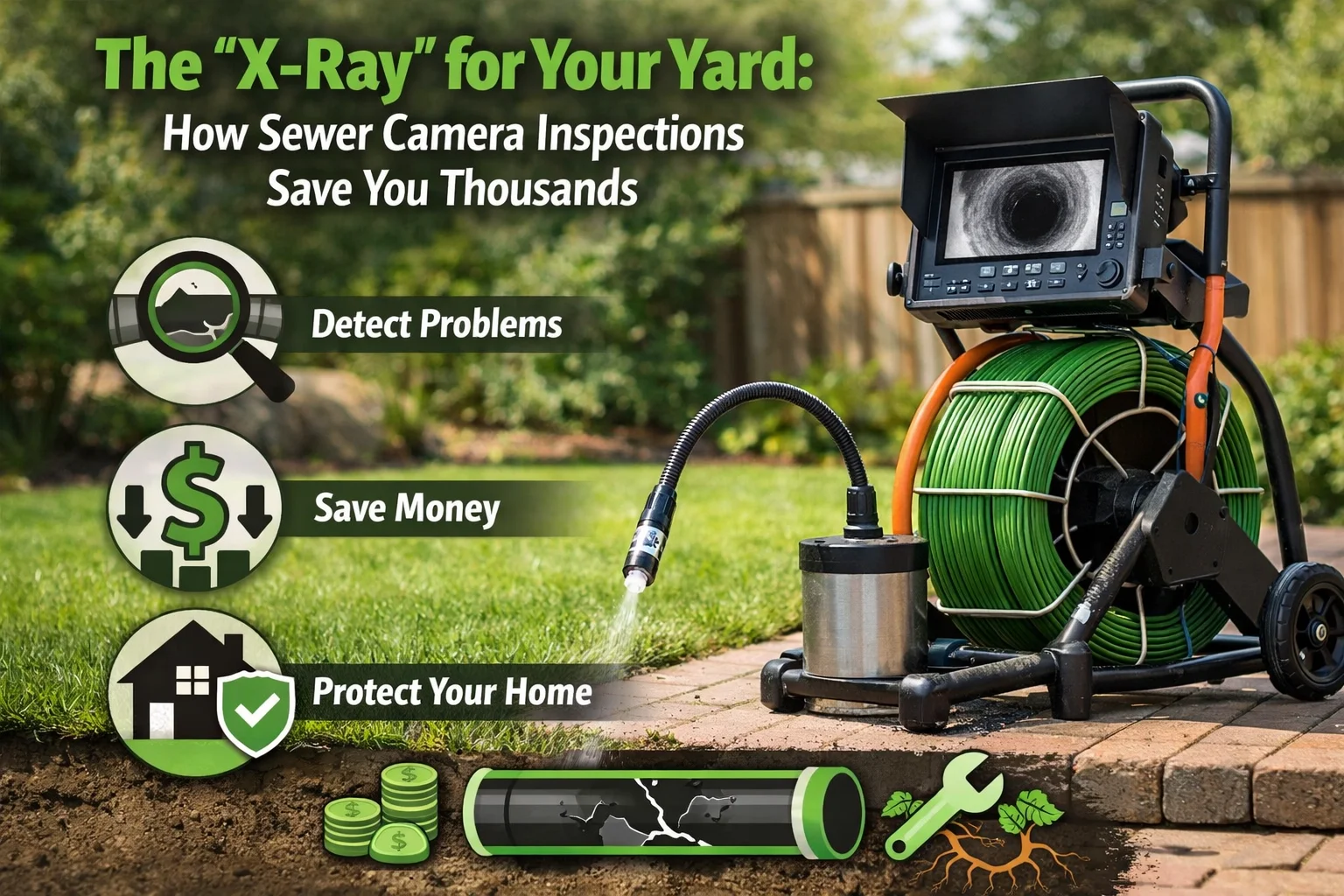
Have you ever looked at a mysterious soggy patch in your Raleigh yard or noticed a slow-draining sink and wondered if your bank account was about to take a massive hit? For decades, the only way to find out what was happening inside a buried pipe was to start digging: an expensive, messy, and often unnecessary process.
At C&C Environmental Services, we believe you shouldn't have to pay for "guesswork" when it comes to your home's infrastructure. Modern technology has changed the game, allowing us to see exactly what is happening under the surface without moving a single shovelful of dirt.
A sewer camera inspection is essentially an "X-ray" for your yard. By using high-definition, waterproof cameras, we can pinpoint the exact cause of a backup or leak, saving homeowners in communities like Durham, Wake Forest, and Cary thousands of dollars in labor and landscaping repairs.
How CCTV Camera Technology Actually Works
The process of a camera inspection is relatively straightforward, yet the technology behind it is incredibly sophisticated. We use a flexible, fiber-optic cable equipped with a high-resolution camera and powerful LED lights to navigate the twists and turns of your plumbing system.
We typically access the line through a "cleanout": a dedicated access point in your yard or basement. As the camera travels through the pipe, it transmits a real-time video feed to a high-definition monitor. This allows our technicians to see every crack, root intrusion, and buildup of debris as it happens.
We don't just look at the screen and guess; we use digital locating equipment to track the camera's physical position from above ground. This means if we find a major break 40 feet down the line, we can mark the exact spot on your lawn with surgical precision.
The "Old Way" vs. The Camera Way
In the past, sewer line repair was often a trial-and-error process. If a homeowner in Apex had a recurring backup, a contractor might suggest digging up the entire line from the house to the street because they couldn't be sure where the blockage originated.
This "blind digging" approach leads to several problems:
Destroyed landscaping, driveways, and sidewalks that cost thousands to replace.
Increased labor hours spent searching for the problem rather than fixing it.
The risk of damaging other utility lines: like gas or water: during the excavation.
Paying for a full sewer line replacement when only a small section needed repair.
By contrast, the camera way identifies the problem in minutes. We can see if your issues are caused by tree roots, a collapsed pipe, or simply a buildup of grease that requires high-pressure jetting rather than a full excavation.
Where the Savings Add Up
When we talk about saving thousands of dollars, we aren't exaggerating. The cost of a professional camera inspection is a fraction of the cost of a major plumbing emergency.
Consider the common expenses associated with "blind" repairs:
Emergency Call-Out Fees: Catching a problem early during a routine inspection avoids the 1.5x or 2x rates charged for Saturday night backups.
Water Damage Restoration: A sewer backup can cost $3,000 to $5,000 or more in professional cleaning and mold remediation for your crawlspace or basement.
Landscaping Replacement: Replacing a mature lawn, flower beds, or a paved walkway can easily exceed the cost of the actual pipe repair.
Targeted Repairs: If the camera shows that 90% of your pipe is in great shape, we can perform a localized sewer pipe repair on the specific damaged section instead of replacing the whole system.
By identifying the exact location and nature of the issue, we ensure the first repair is the only repair. We don't just fix symptoms: we address the root cause, which prevents you from paying for the same job twice.
Common Culprits Caught on Camera
North Carolina properties face unique challenges, from the red clay soil that shifts during heavy rains to the aggressive roots of oak and pine trees. Our cameras regularly find several "usual suspects" that disrupt your service.
1. Root Intrusion
Roots are naturally drawn to the moisture and nutrients found inside sewer lines. They can enter through tiny cracks or loose joints, eventually growing into a "root ball" that acts as a dam.
2. Pipe "Bellies" or Sagging
Ground shifting or poor installation can cause a section of the pipe to sink. These bellies collect water and debris, leading to frequent clogs. A camera is the only way to visualize a sag without digging up the whole yard.
3. Offset Joints
In older homes in places like Chapel Hill or Knightdale, clay or concrete pipes can shift over time. This creates a "lip" at the pipe joint that catches toilet paper and solids, causing a backup.
4. Scale and Corrosion
While common in cast iron pipes, scale buildup can restrict flow. Seeing the internal condition helps us decide if the pipe is a candidate for cleaning or if water line repair or replacement is necessary.
Not Just for Sewers: Water Line Repair and the Camera
While "sewer camera" is the common term, this technology is equally valuable for assessing water lines and drainage systems. If you have an unexplained drop in water pressure or a spike in your utility bill, a camera inspection can help verify if the issue is a leak or a restriction in your service line.
Many homeowners are surprised to learn that they are responsible for the lines running from their home to the utility connection at the street. Knowing the condition of your water pipe repair needs before a total failure occurs can save you from a massive, unexpected bill.
The Pre-Purchase "Must-Have" for NC Homebuyers
If you are buying a home in the Triangle area, a standard home inspection rarely covers the main sewer line. Most inspectors check that the toilets flush and the sinks drain, but they don't look at the health of the pipes buried six feet underground.
We strongly recommend a sewer camera inspection as part of your due diligence. Discovering a collapsed sewer pipe before you close on a house can save you $10,000 or more: or at the very least, give you the leverage to ask the seller for a repair credit. It is a small investment (usually a few hundred dollars) that provides massive peace of mind.
The C&C Environmental Services Difference
We don't just show up with a camera: we show up with solutions. Our team uses state-of-the-art CCTV equipment that provides crystal-clear footage, which we can share with you directly.
We pride ourselves on transparency. After we complete an inspection, we provide:
A detailed explanation of what we found (no technical jargon).
A digital copy of the footage for your records or insurance claims.
A comprehensive, itemized quote for any necessary repairs.
Professional advice on whether a repair or a full replacement is your most cost-effective long-term option.
Our goal is to help you make an informed decision. We understand that pipe problems are stressful, and our job is to remove the "unknown" from the equation.
Proudly Serving Central North Carolina
C&C Environmental Services provides expert sewer and water line diagnostics across the region. We understand the local soil conditions and municipal requirements that affect your property.
Our service areas include:
Raleigh and Cary
Durham and Chapel Hill
Wake Forest and Rolesville
Apex and Holly Springs
Knightdale, Wendell, and Zebulon
Garner and Fuquay-Varina
Don't Wait for a Backup to Happen
If you have been dealing with gurgling drains, recurring clogs, or wet spots in your yard, it is time to stop guessing. A sewer camera inspection is the fastest, cleanest, and most affordable way to get the truth about your underground pipes.
Whether you need a targeted sewer line repair or a complete system evaluation, C&C Environmental Services is here to help. We combine years of site development expertise with the latest diagnostic technology to protect your property and your wallet.
Ready to see what’s really happening underground? Contact C&C Environmental Services today at (336)549-8990 or visit our Knowledge Center to learn more about maintaining your home’s essential infrastructure.